The QD OLED vs OLED question comes up as soon as you shop for a high-end OLED gaming monitor. Both technologies use self-emitting pixels with perfect blacks and lightning-fast response, but they create colour in different ways. Samsung’s QD OLED uses quantum dots, while LG’s WOLED uses white OLED with colour filters. Those differences affect colour vibrancy, brightness, how blacks look in bright rooms and text clarity. This guide explains QD OLED vs OLED in plain language, so you can choose the right panel.
North Gaming PCs stocks IPS and VA monitors priced in Canadian dollars with a 2-year warranty, and this guide helps you compare premium OLED options with them. Every price is shown in Canadian dollars, so there is no surprise currency conversion at checkout, and you can email our team whenever you need help choosing.
What does QD OLED vs OLED really mean?
Strictly speaking, QD OLED is a type of OLED. When people compare QD OLED vs OLED, they usually mean Samsung Display’s QD OLED panels versus LG Display’s WOLED panels, the two main OLED technologies used in gaming monitors. Both offer per-pixel lighting and near-instant response, and both appear in many brands’ monitors, because panel makers sell to several monitor companies.
How QD OLED works
QD OLED panels use blue OLED light. Quantum dot layers convert some of that blue light into pure red and green, producing very saturated, bright colours. Because there is no colour filter absorbing light, colour brightness stays high, which gives QD OLED its famous vivid look. Reds and greens in particular appear rich and intense, even at high brightness.
How WOLED works
WOLED panels use white OLED pixels with red, green and blue colour filters, plus an extra unfiltered white subpixel that boosts brightness. This design delivers high overall brightness, but very bright saturated colours can look a little less vivid than QD OLED.
Colour and vibrancy
In the QD OLED vs OLED comparison, QD OLED usually wins on colour volume, meaning colours stay rich even when bright. Games with vivid palettes and HDR content can look especially striking. WOLED colours are still excellent and accurate, with a slightly more muted look in bright saturated scenes.
Black levels in bright rooms
This is a key difference. QD OLED panels lack the polarising layer that WOLED panels use, so in a bright room ambient light can make blacks look slightly grey or purple. In a dark room, both show perfect blacks. WOLED keeps blacks looking deeper when lights are on. If your room is bright, WOLED often looks better.
Brightness
Both technologies are bright in small highlights. WOLED’s white subpixel helps full-screen brightness, while QD OLED excels at bright, saturated colours. Newer generations of both have raised brightness noticeably, which makes either a stronger choice for daytime gaming than early OLED monitors were.
Text clarity
Both use non-standard subpixel layouts that can cause slight colour fringing around text. QD OLED’s triangular layout and WOLED’s RWBG layout each show it differently. Newer panels have improved, but if you read and write all day, check reviews of the exact model for text clarity.
Burn-in
Both QD OLED and WOLED can suffer burn-in with long hours of static content. Both use pixel refresh, pixel shifting and logo dimming to reduce the risk, and many monitors come with burn-in warranties. Neither technology is clearly immune in the QD OLED vs OLED comparison, so habits and warranty matter more than panel type.
Refresh rates and gaming performance
Both offer high refresh rates of 240 Hz to 360 Hz or more and response times around 0.03 milliseconds. Motion clarity is outstanding on either. For competitive gaming, pick based on refresh rate and resolution rather than QD OLED vs OLED technology.
Which should you choose?
- Dim room, vivid colours and HDR: QD OLED.
- Bright room, deeper blacks with lights on: WOLED.
- Lots of text work: check reviews; consider IPS if text clarity is critical.
- Budget: compare current prices, as both have become more affordable.
QD OLED vs OLED for HDR
Both technologies deliver superb HDR. QD OLED tends to show brighter, more saturated colours in HDR highlights, which makes sunsets, neon lights and explosions look vivid. WOLED is often brighter on large white areas, such as bright skies or snowy scenes. In the QD OLED vs OLED comparison for HDR, both are excellent, so pick based on your room and taste.
QD OLED vs OLED for work
Text fringing and static content matter for work. Both panel types show slight fringing on certain subpixel layouts, and both need care to avoid burn-in from static apps. If you work long hours on the same monitor, an IPS screen may be the more comfortable choice, with OLED reserved for gaming.
Prices and generations
Both QD OLED and WOLED panels improve with every generation, gaining brightness, refresh rate and better text rendering. Prices fall as new models launch, so last year’s panels can be excellent value. When comparing QD OLED vs OLED models, check the panel generation in reviews, because a newer panel of either type usually beats an older one.
Warranty matters most
Because burn-in risk exists with both technologies, the warranty is often the deciding factor. Look for a monitor with at least two years of burn-in coverage, and register it after purchase. A strong warranty makes either side of the QD OLED vs OLED choice much safer.
OLED vs LCD alternatives
If burn-in worries you or your budget is tight, quality IPS and VA monitors offer great gaming without OLED’s trade-offs. Our IPS vs OLED guide compares those options, and our OLED monitor guide explains OLED care.
QD OLED vs OLED for sim racing and flight sim
Both technologies make night racing and dark cockpits look stunning. QD OLED’s vivid colours suit bright, colourful tracks, while WOLED’s deeper blacks in lit rooms suit setups near windows. Use care features during long sessions with static HUDs.
Our picks
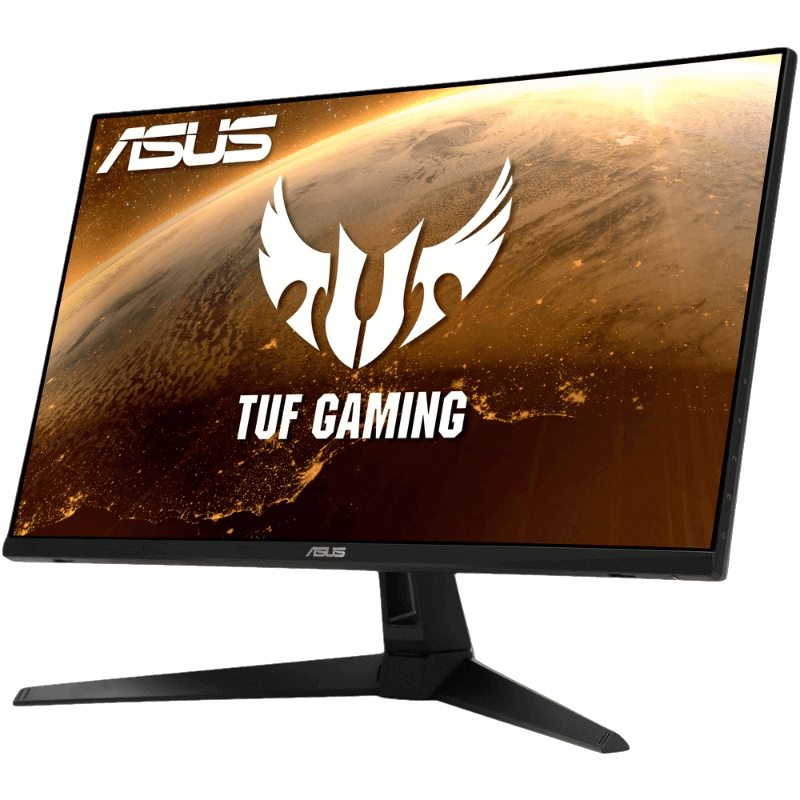
- ASUS TUF VG27AQ1A: a 1440p IPS screen with no burn-in risk.
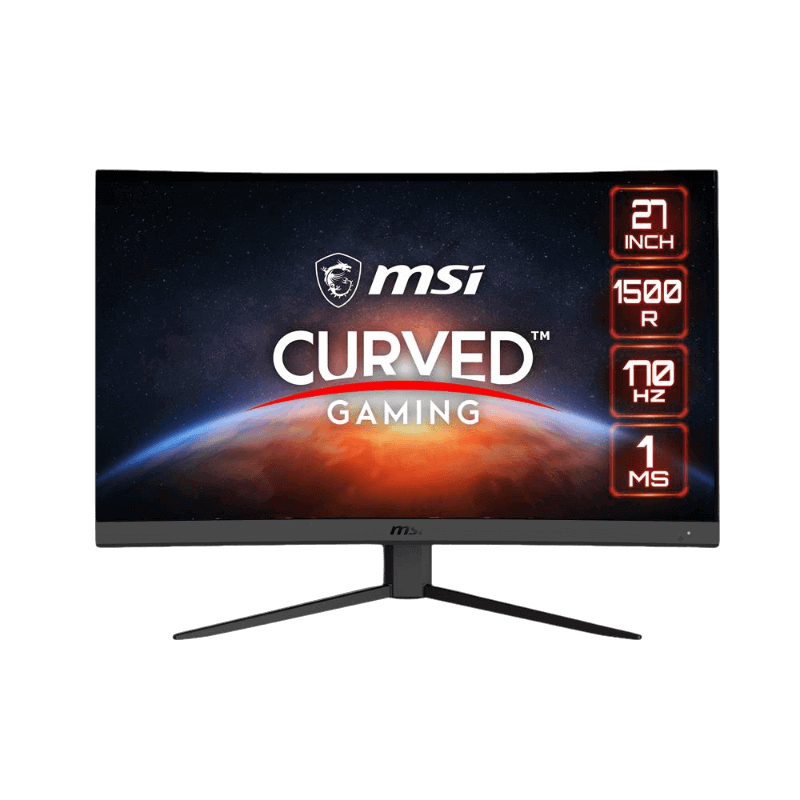
- MSI G27CQ4 E2: a curved 1440p VA monitor with strong contrast.
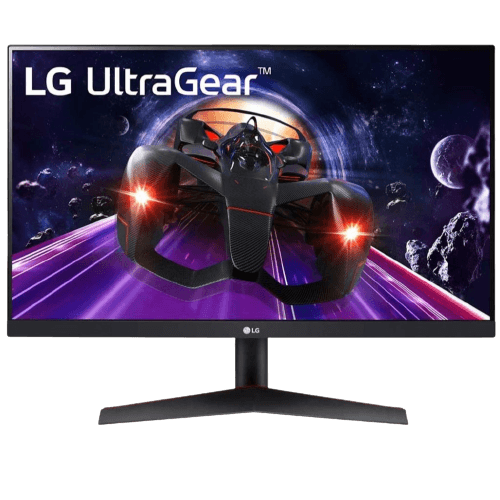
- LG 24GN60T-B: an affordable 1080p IPS monitor at 144 Hz.
QD OLED vs OLED FAQ
Is QD OLED better than WOLED?
QD OLED offers more vivid colour; WOLED keeps blacks deeper in bright rooms. Both are excellent.
Which has more burn-in risk?
Both can burn in with static content. Care features and warranties matter more than the panel type.
Which is better for text?
Both can show slight fringing. Check reviews of specific models if you work with text all day.
Can I tell QD OLED vs OLED apart easily?
Side by side, yes: QD OLED colours look more vivid and WOLED blacks look deeper in a lit room. On its own, either looks superb.
Do both support high refresh rates?
Yes. Both are available at 240 Hz, 360 Hz and higher in 1440p and 4K gaming monitors.
Which lasts longer?
With sensible use and protection features, both last many years. Warranty coverage is the best safeguard.
The verdict
In the QD OLED vs OLED decision, choose QD OLED for vibrant colour in dim rooms and WOLED for deeper blacks in bright rooms. Both deliver superb gaming motion and contrast. Browse our gaming monitors, compare detailed panel tests at RTINGS, or contact us for advice.