A small gaming PC saves desk space, fits neatly under a TV and looks great in a living room, yet it can still play the latest games at high settings. The trade-off is planning: compact cases limit graphics card length, cooler height and power supply size, and heat has less room to escape. This guide explains case sizes, the parts that fit, how to keep a small gaming PC cool and quiet, and when a slightly larger build is the smarter choice.
North Gaming PCs prices every system in Canadian dollars, and every build carries our 2-year warranty. Our team can also help with setup questions after your order arrives, so you can get everything configured properly and enjoy your upgrade from the first day.
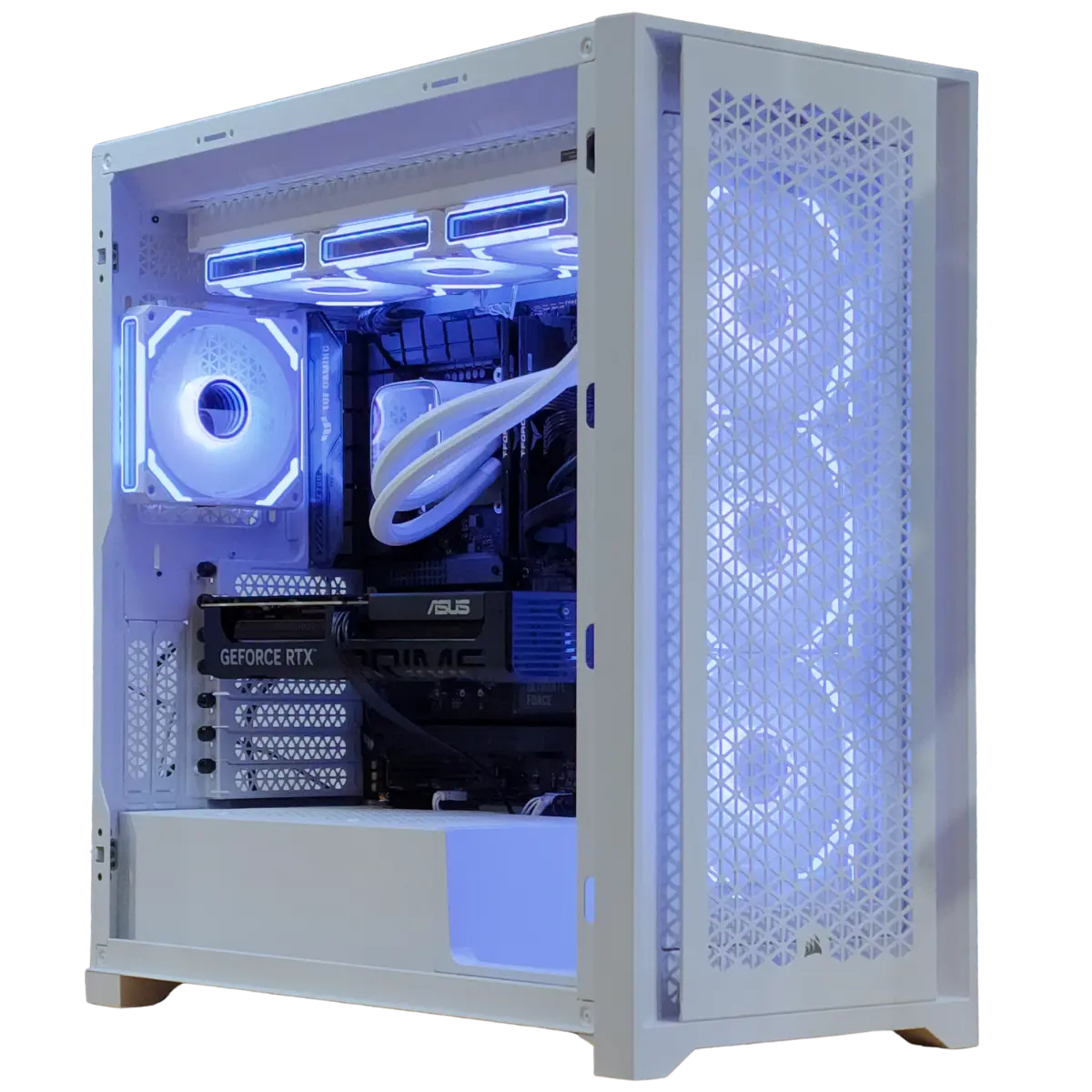
Why choose a small gaming PC?
People choose a small gaming PC for many reasons. It takes up less space on a desk, slips into an entertainment unit for couch gaming, and travels easily to a friend’s place or a LAN event. A compact build can also look more like a piece of furniture than a computer, which suits shared rooms and minimalist setups.
Case sizes explained
Small cases come in a few common sizes:
- Mini-ITX: the smallest common motherboard size, with one expansion slot and two memory slots. Cases range from around 10 to 25 litres.
- Micro-ATX: a little larger, with more slots and often better airflow in compact towers.
- Small ATX: some compact cases fit full ATX boards while staying shorter than a standard mid tower.
A small gaming PC around 15 to 25 litres is a good balance of size, cooling and ease of building.
Choosing a graphics card that fits
The graphics card is the biggest challenge. Check the case’s maximum card length, height and thickness. Many brands make compact dual-fan versions of popular cards, and NVIDIA’s SFF-Ready label marks cards designed for small cases. An RTX 5060 Ti or RTX 5070 in a compact design is a sweet spot for a small gaming PC, offering strong 1440p performance without excessive heat. Read our RTX 5070 guide for performance details.
Power supplies for small cases
Many compact cases need an SFX or SFX-L power supply instead of a standard ATX unit. These are smaller and cost a little more for the same wattage. Choose a quality unit with enough headroom for your graphics card, and check that its cables suit the case layout. Our guide to the best power supply for gaming PC builds explains wattage and ratings.
Cooling a small gaming PC
Heat is the main enemy in a compact case. Choose a case with plenty of mesh or ventilation, and plan airflow so cool air reaches the graphics card and processor. Low-profile air coolers fit most small cases, while 240 mm or 280 mm AIO coolers suit cases with radiator support. An efficient processor, such as a modern six or eight-core chip with a modest power limit, makes cooling far easier.
Noise in compact builds
Small fans spin faster to move the same air, which can make a small gaming PC louder than a larger tower. Larger 120 mm or 140 mm fans, sensible fan curves and an efficient graphics card keep noise down. Undervolting the graphics card slightly is a popular trick that cuts heat and noise with little performance loss.
Building tips
Building in a small case requires patience. Plan cable routing before you start, install the processor, memory, SSD and cooler on the motherboard outside the case, and fit the power supply and its cables before the graphics card. Short or custom-length cables reduce clutter, and every bit of space saved helps airflow. Use a compatibility tool such as PCPartPicker to check clearances first.
Performance expectations
A well-designed small gaming PC performs almost exactly like a larger tower with the same parts, as long as it stays cool. Very high-end cards such as the RTX 5090 are difficult to fit and cool in tiny cases, so most compact builds top out around an RTX 5070 Ti. For 1080p and 1440p gaming, that is more than enough.
Upgrades and limitations
Compact cases limit future upgrades. A Mini-ITX board has only two memory slots and fewer M.2 slots, and a bigger graphics card may not fit later. Plan ahead: buy 32GB of memory, a 2TB SSD and a power supply with headroom from the start.
Small gaming PC vs console
A small gaming PC can sit beside a TV just like a console, with a controller for couch play. It offers more games, mods and upgrades, and it doubles as a full computer. Steam’s Big Picture mode makes navigating with a controller easy.
A small gaming PC for sim racing
Compact PCs suit sim rigs with limited space. Some cockpits include PC mounts, and a small case can sit on a shelf beside the seat. Plan enough USB ports for your wheelbase, pedals and accessories, or add a powered hub. Pair it with a compact sim racing cockpit or a foldable stand for a space-saving setup.
Small gaming PC for the living room
A small gaming PC under the TV can replace a console and a streaming box at once. Choose a quiet case and an efficient graphics card so fan noise does not spoil films, connect it with HDMI 2.1 for 4K at 120 Hz, and enable the TV’s game mode to cut input lag. A wireless keyboard with a built-in touchpad makes desktop tasks easy from the couch, and a controller handles most games.
Travelling with a small gaming PC
Compact builds are easy to carry to a friend’s place or a LAN party. Use a padded bag, remove a heavy graphics card or brace it for long trips, and pack the power cable, display cable and peripherals together. A small gaming PC that weighs less than eight kilograms is comfortable to carry by hand.
When to choose a bigger case
If you want an RTX 5080 or RTX 5090, a high-end processor, a quiet system under heavy load or easy upgrades, a mid-tower is the better choice. Our gaming PC case guide compares sizes in detail.
Our picks
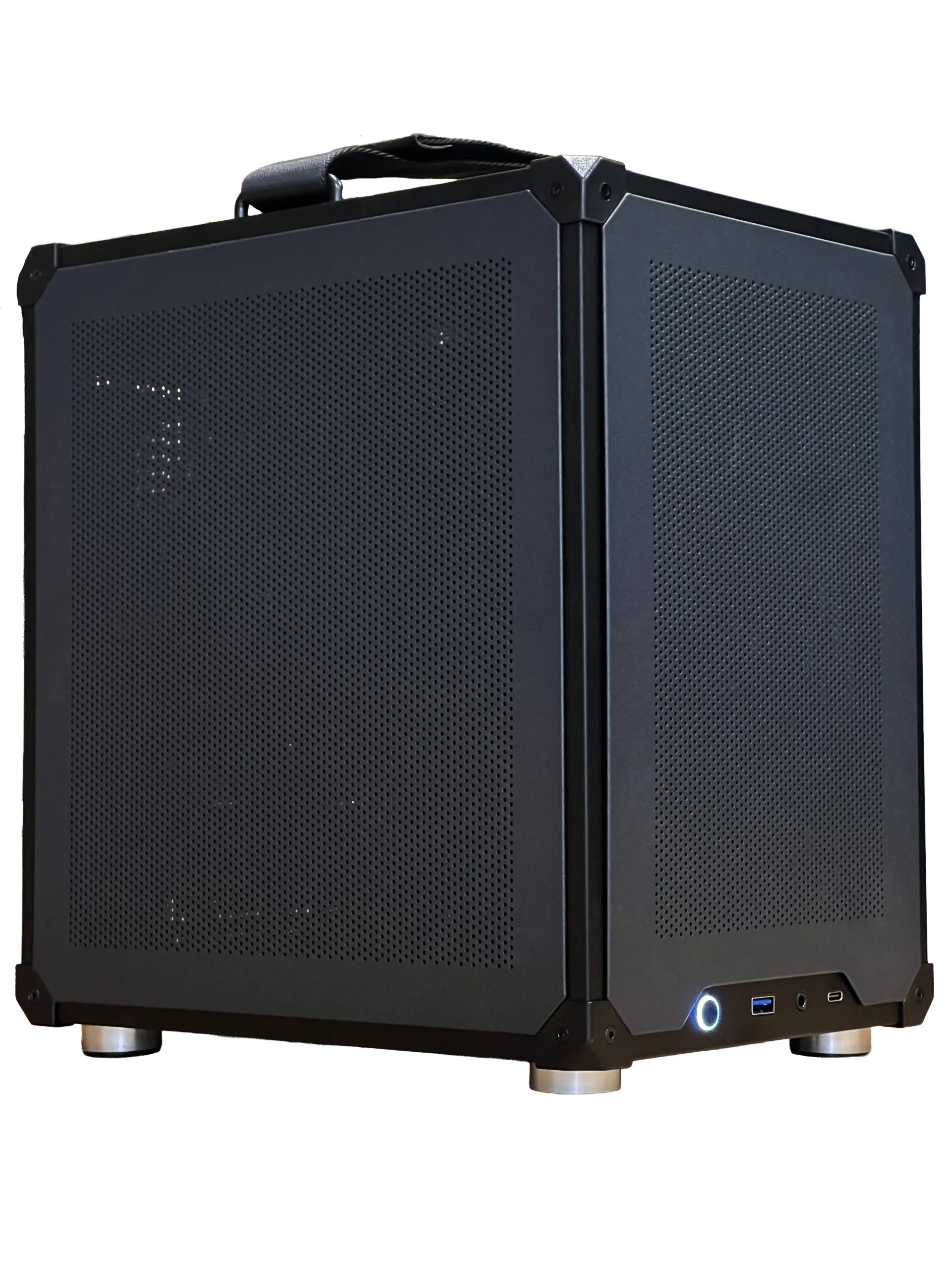
- Ready-to-ship gaming PC: an efficient RTX 5060 Ti 16GB system ready to play.
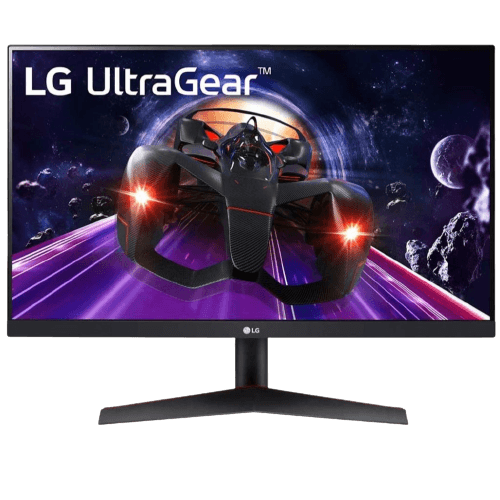
- LG 24-inch 144 Hz monitor: a compact, crisp 1080p display.
- 1TB NVMe SSD: cable-free M.2 storage, ideal for small builds.
You can also choose a case size in our configurable gaming PC.
Small gaming PC FAQ
Is a small gaming PC slower than a big one?
Not with the same parts, as long as it stays cool. Very high-end cards are harder to fit and cool in small cases.
What graphics card fits a small gaming PC?
Compact dual-fan cards, often labelled SFF-Ready, such as RTX 5060 Ti and RTX 5070 models.
Are small gaming PCs louder?
They can be, because smaller fans spin faster. Good airflow and efficient parts keep them quiet.
Do small cases cost more?
Small cases and SFX power supplies can cost slightly more, but the difference is modest.
Build small, play big
A small gaming PC delivers big performance when you choose a well-ventilated case, a compact graphics card, a quality SFX power supply and efficient parts. Plan upgrades early and keep airflow in mind. Explore our gaming PCs, or contact us about a compact build.