The best sim racing pedals can make you faster than almost any other upgrade. Many racers spend most of their budget on a powerful wheelbase, yet braking consistency is where lap time is really won and lost. A good brake pedal lets you brake at the same pressure lap after lap, trail brake smoothly into corners and avoid lock-ups. This guide explains the types of pedals, why load cell brakes matter, what to look for and our picks for the best sim racing pedals at every budget.
North Gaming PCs stocks pedals from MOZA, SIMAGIC, Asetek, SIMNET, CONSPIT and Thrustmaster, priced in Canadian dollars with a 2-year warranty. Our team can also help with setup questions after your order arrives, so you can get everything configured properly and enjoy your upgrade from the first day.
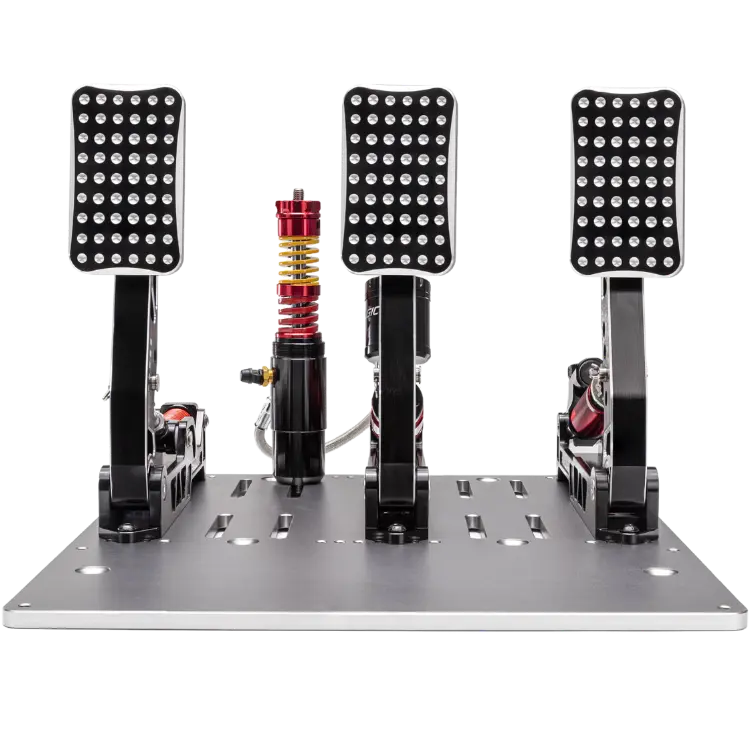
Why pedals matter so much
Your brain remembers pressure far better than distance. Real car brakes respond to how hard you press, not how far the pedal moves. Pedals that measure pressure let you build muscle memory, so you can repeat the same braking effort every lap. That consistency is why upgrading pedals often brings bigger gains than upgrading the wheel.
Types of sensors in the best sim racing pedals
- Potentiometer: measures pedal position; affordable but can wear over time.
- Hall effect: measures position with magnets; contactless and durable.
- Load cell: measures force on the brake; the most realistic and consistent.
- Hydraulic: uses real hydraulic components or damping for an authentic feel.
- Active: a motor controls the pedal’s resistance and effects.
Load cell brakes explained
A load cell is a sensor that measures force. In a load cell brake, pressing harder increases the signal, just like a real car. Most load cell brakes can be tuned with elastomers or springs to change the feel, and maximum force can be set in software. The best sim racing pedals for most racers include a load cell brake.
Hydraulic pedals
Hydraulic pedals add fluid damping or real hydraulic systems to recreate the firm, progressive feel of a race car brake. Sets such as the SIMAGIC P2000 and Asetek’s hydraulic-damped Invicta and Forte pedals offer a premium experience for serious drivers.
Active pedals
Active pedals use a motor to change resistance in real time. They can simulate ABS pulsing, brake fade and different pedal feels for different cars. The MOZA mBooster and SIMAGIC P-Active are examples. They are exciting but more expensive than traditional load cells.
Best sim racing pedals on a budget
Entry pedals such as the MOZA SRP2 and Thrustmaster T3PM give a solid start. If your budget allows, jumping straight to an affordable load cell set such as the SIMAGIC P700 or MOZA CRP2 is the best value step for most racers.
Best sim racing pedals in the mid-range
Mid-range load cell sets include the SIMAGIC P700 and P1000, MOZA CRP2, SIMNET SP Pro, CONSPIT CPP EVO and Thrustmaster Raceline III LC. These deliver excellent consistency, adjustable feel and strong build quality for years of racing.
Best sim racing pedals for serious racers
High-end options include the SIMAGIC P2000 hydraulic set, Asetek Forte and Invicta pedals with hydraulic damping, and active pedals. They suit racers who want the most realistic brake feel and have a rigid cockpit to mount them.
Two or three pedals?
Most modern race cars use paddle shifters, so a throttle and brake are enough for GT and formula racing. A clutch pedal adds realism in road cars, classics and rally, and helps with race starts in some sims. Many of the best sim racing pedals let you add a clutch later.
Inverted pedals
Inverted pedals hang from above, like those in many real race cars. They save floor space, improve heel-and-toe technique and look authentic. They need a cockpit with an inverted mounting option.
Adjusting the best sim racing pedals
Look for adjustable pedal spacing, face angle, travel and brake stiffness. These let you match your seating position and preferences. Adjusting the brake feel with different elastomers is one of the most effective ways to find confidence under braking.
Setting maximum brake force
Set the maximum brake force to a level you can reach comfortably and repeatedly, not the hardest you can press once. Too high, and you will under-brake when tired; too low, and you lose precision. Many racers start around 30 to 60 kg and adjust from there.
Mounting the best sim racing pedals
Load cell pedals need a solid base. On a carpet or hard floor, a plate or cockpit stops them sliding. Strong brakes can push a chair backwards, so a cockpit or wheel stand with a fixed seat is ideal. Our best sim racing cockpit guide explains options.
Compatibility
PC pedals connect by USB and work with any base. Console pedals usually connect through a licensed wheelbase. Check compatibility if you race on PlayStation or Xbox. Our best racing wheel for PS5 guide covers console options.
Calibration and software
Calibrate pedals in the maker’s software, set small dead zones and adjust output curves. A slightly progressive brake curve helps many drivers. Our MOZA Pit House guide shows the process for MOZA pedals.
How to brake better
- Brake hard and early in a straight line.
- Release gradually as you turn in, known as trail braking.
- Use the same pressure each lap as a reference.
- Practise one corner repeatedly to build muscle memory.
- Use telemetry to compare brake traces.
Pedal upgrades for existing sets
You do not always need a new set. Many of the best sim racing pedals accept upgrade kits, such as stiffer elastomers, a load cell conversion, a clutch module or haptic motors. Thrustmaster’s T-LCM, MOZA’s CRP2 accessory kit and SIMAGIC’s upgrade kits are examples. Upgrading a good set can be cheaper than replacing it.
Haptic feedback
Haptic motors attached to the pedals vibrate when wheels lock or spin. This information helps you find the limit under braking and acceleration without relying only on sound. Haptics pair well with the best sim racing pedals and are an affordable addition.
Our picks
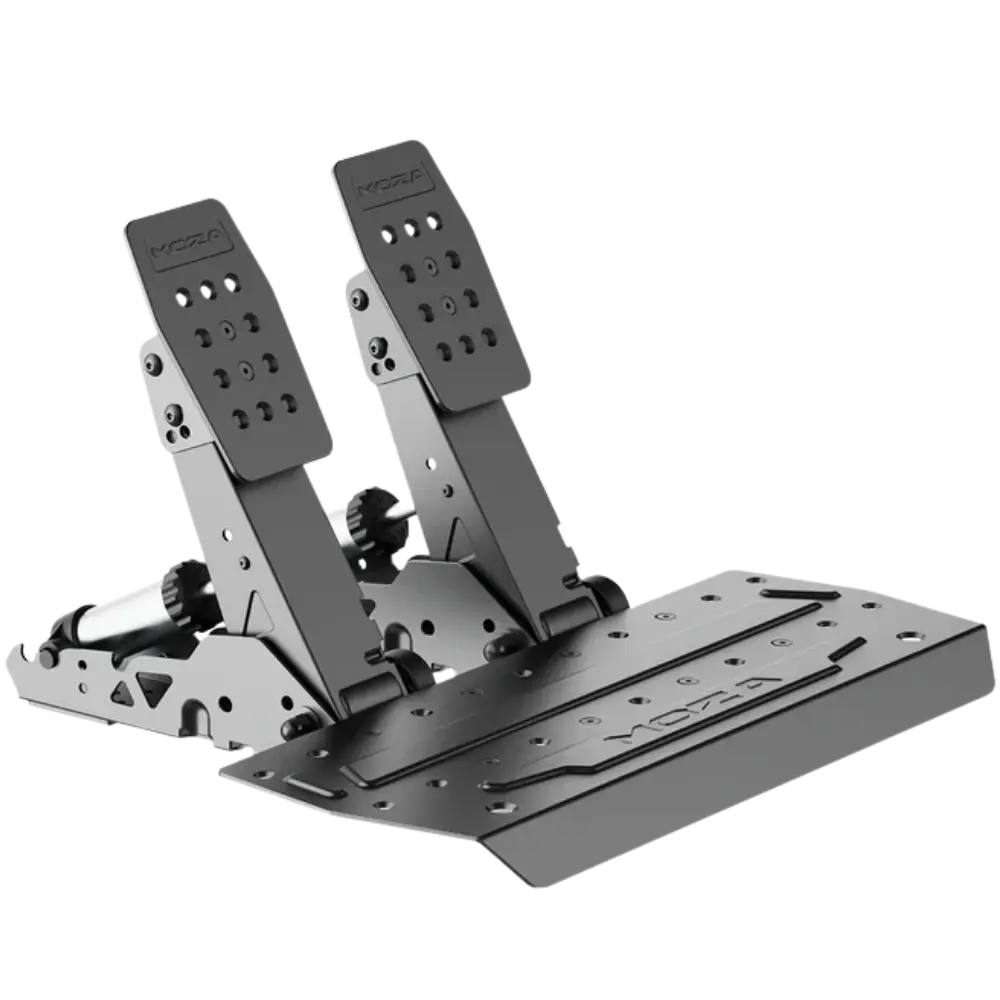
- MOZA SRP2 pedals: an affordable entry upgrade.
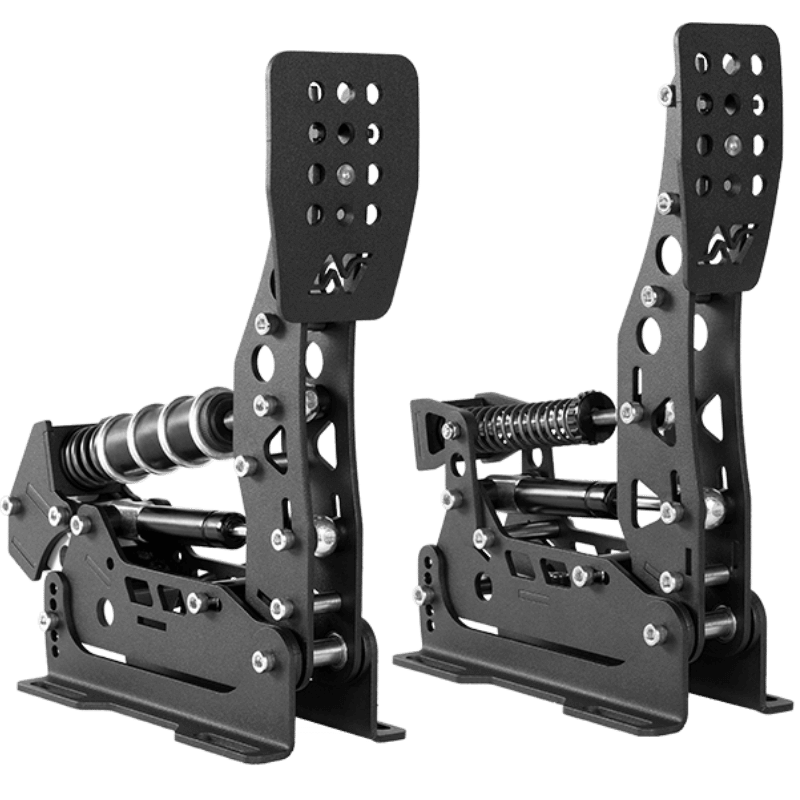
- SIMNET SP Pro 2 pedals: solid load cell braking at a mid-range price.
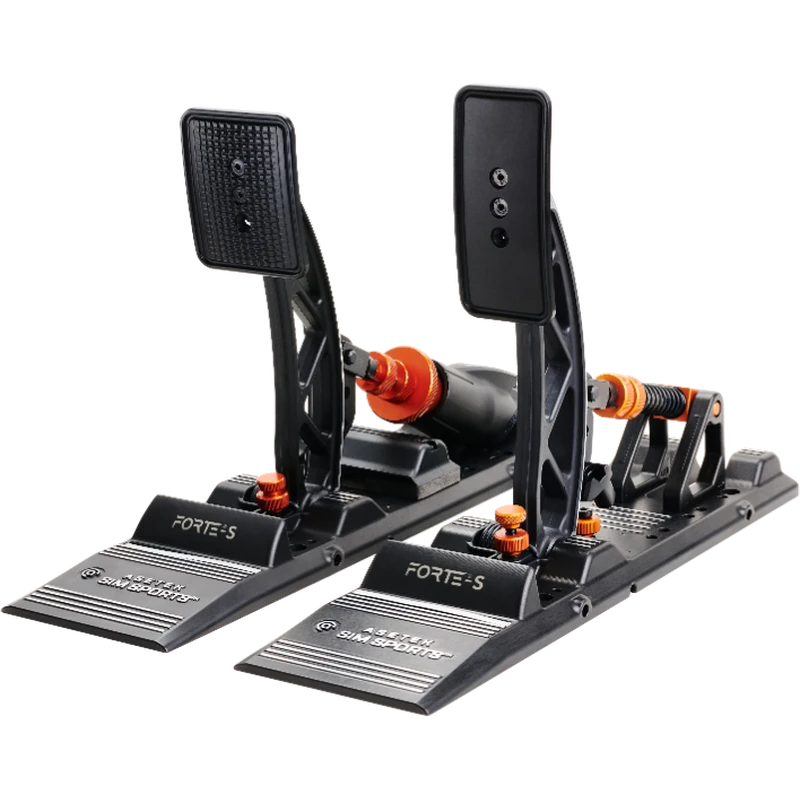
- Asetek Forte S-Series pedals: premium braking with hydraulic damping.
The SIMAGIC P2000 is our pick among the best sim racing pedals for realism.
Best sim racing pedals FAQ
Are load cell pedals worth it?
Yes. They are the most effective upgrade for consistent braking.
Which pedals work on PS5?
Licensed pedals that connect through a PlayStation-compatible wheelbase.
Do I need a clutch?
Not for most modern race cars, but it adds realism in road and classic cars.
Can I mix pedal and wheel brands?
Yes, on PC. USB pedals work with any wheelbase.
What brake force should I use?
Start around 30 to 60 kg and adjust to what you can repeat comfortably.
Do I need a cockpit for load cell pedals?
It is strongly recommended, so pedals and seat do not move.
Are active pedals worth it?
They are impressive, but a good load cell set offers better value for most racers.
Upgrade your braking
The best sim racing pedals give you consistent, confident braking and often faster lap times than a wheel upgrade. For most racers, a load cell set is the ideal choice. Read about pedal technology at Sim Racing Setup, browse our racing pedals, or contact us for advice.